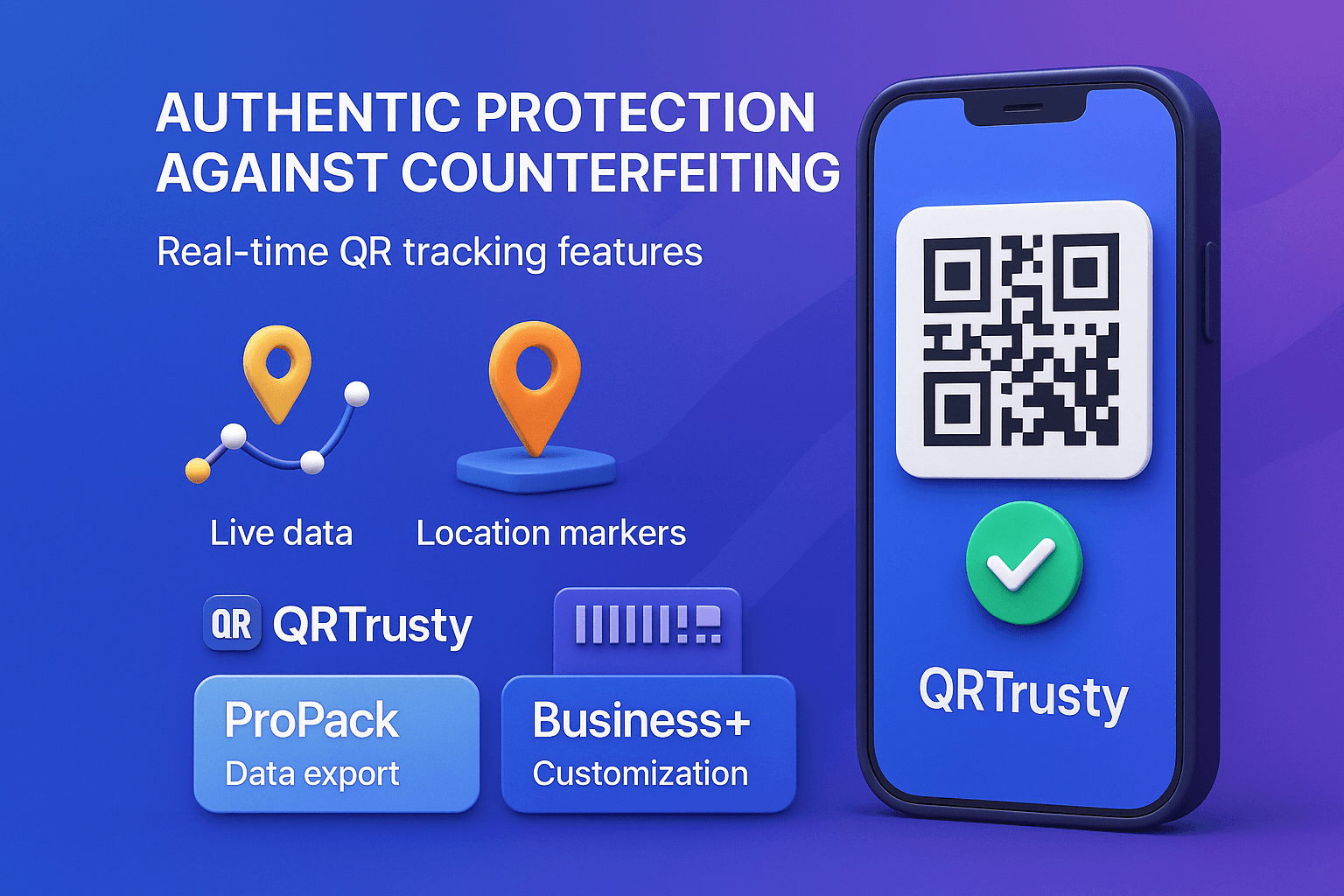
1. Introduction: Why Real-Time Tracking Matters Now
Markets are no longer slow, local, and predictable. A single social media post, a delayed container, or a small batch of counterfeit products can travel across borders in hours. For manufacturers, exporters, and brand owners, this reality creates a new problem: by the time you discover what is happening in the market, the damage may already be done. Real-time tracking exists to close this gap between what is happening and what you know.
Real-time QR tracking turns every product label into a live sensor. Every scan tells you when and where a product was verified and what pattern of behaviour is building up across thousands of scans. Instead of waiting for distributor reports or complaints from buyers, you see the truth directly from the field: the cities where your products are actually sold, the time of day when customers interact with your packaging, and the abnormal spikes that might signal counterfeit or parallel trade.
In this guide, we will explore how QRTrusty helps you build this real-time layer without needing special hardware. You keep full control of your brand experience, while the platform silently listens to every scan and transforms it into understandable charts and alerts that you can use in daily decisions.
2. The Rise of Real-Time QR Tracking
Tracking products is not new. For years, companies relied on barcodes, batch numbers, and later RFID tags. But these systems usually depended on internal scanners, warehouse infrastructure, and expensive hardware. They worked well inside a factory or distribution centre, but they were almost invisible once the product reached retailers and end consumers.
QR codes changed this dynamic completely. A QR code can be printed directly on your label, outer carton, or leaflet at almost zero cost. Any smartphone can read it. The same graphic block that directs users to a website can also send detailed telemetry to your backend: scan time, approximate location, device type, and which unique code was scanned. When you multiply this across thousands of items, you suddenly get an organic network of live signals from across the market.
Real-time tracking became even more important as counterfeiting increased in categories such as cosmetics, supplements, electronics, and personal care. Buyers now expect to verify authenticity, not only to see a marketing page. Governments and retailers are also demanding better traceability across the supply chain. QR-based tracking provides a flexible solution that can be deployed on existing packaging without changing logistics workflows.
However, a QR code by itself is only a doorway. What makes it powerful is the platform behind it: the database that knows which codes are valid, the logic that decides whether a scan is suspicious, and the dashboards that show you the full picture. This is the layer that QRTrusty provides.
3. How Real-Time Tracking Works Inside QRTrusty
The workflow in QRTrusty is designed to be simple enough for small brands but powerful enough for factories that ship to multiple countries. The steps below describe what happens from the moment you generate a code until the moment you review scan data on your screen.
- Secure code generation. You create unique verification or tracking codes using the QRTrusty generator or your dedicated dashboard workflows. Each code is stored with metadata such as product name, batch number, production date, client or distributor, and target market.
- Smart label design. Instead of a raw black-and-white code, QRTrusty helps you design printable labels that can include your logo, brand colours, product name, instructions, and a clear call to action such as scan to verify. This encourages genuine users to interact with the code, which increases the volume of real signals.
- Printing and application. You print the codes on stickers, cartons, or directly on the packaging. Each individual item or box receives its own code. The code can be static per item or per batch depending on your strategy.
- Customer or distributor scan. When the QR is scanned, the user is redirected to a verification or tracking page hosted by QRTrusty, often under a branded subdomain such as brand.qrtrusty.com. At the same time, the system records the scan event.
- Real-time data capture. For every scan, QRTrusty records fields such as timestamp, device type, country and city estimated from IP, language preference, and whether the scan looks like a first-time or repeated scan.
- Risk checks. The system compares the new scan against historical behaviour for that code. If the same code is scanned repeatedly in different distant locations or in unrealistic quantities, QRTrusty can mark the event as suspicious or potentially counterfeit.
- Dashboard visualisation. All these events are aggregated and displayed in charts, tables, and maps, allowing you to discover patterns at a glance rather than manually reading logs.
From your perspective, the complexity is hidden. You simply see honest activity versus suspicious behaviour, which products are moving, and where verification demand is coming from. This data then feeds your marketing, sales, and anti-counterfeiting decisions.
4. Behind the Scenes: Architecture and Data Flow
Understanding the technical flow helps you trust the system and explain it to partners. In simplified terms, QRTrusty is built around four layers.
- Identification layer. This is the universe of unique IDs representing products, batches, and manual verification codes. Each ID is cryptographically hard to guess and linked to a specific tenant or brand.
- Routing and verification layer. When a scan hits the server, routing logic decides which brand tenant should answer, which language should be displayed, and whether the code is valid, expired, or already flagged as risky.
- Logging and analytics layer. Each scan is recorded in an append-only log known as the scan history. Aggregations run on this data to calculate totals by geography, timeline, product group, or distributor.
- Experience layer. This is what you and your customers see: the verification page, the confirmation message, and the brand analytics interface for your team.
Because the system is cloud-native, it can process large spikes of scan activity, for example when a new product launches or a marketing campaign encourages buyers to verify their purchase. You do not need to maintain your own infrastructure or security patching routines: you simply focus on printing the right labels and interpreting the insights.
5. Business Benefits You Can Actually Feel
Real-time tracking sounds technical, but the impact is very practical. Below are some of the most important advantages that brands notice after a few months of using QRTrusty.
Earlier counterfeit detection
Spikes of scans from unexpected cities, sudden changes in behaviour, or many invalid codes are early-warning signals that something is wrong in the market. You can react before retailers and regulators blame your brand.
Deeper channel visibility
If you export through distributors, you rarely see the full picture. Real-time tracking lets you watch where final scans happen and compare that with planned markets, highlighting leaks or grey channels.
Better product and packaging decisions
By correlating scan activity with packaging variations, campaigns, or seasons, you learn which designs drive more verification and trust, and which packages remain silent on shelves.
Proof for partners and regulators
Charts and reports generated from live scans act as evidence that you are actively monitoring your products and fighting counterfeiting. This strengthens negotiations with distributors, authorities, and large buyers.
Ultimately, every insight you gain from real-time tracking should translate into a decision: adjusting prices in a certain region, choosing a stronger distributor, launching education campaigns for buyers, or blocking suspicious batches. QRTrusty is built to support these decisions with clean, trustworthy data.
6. Industry Use Cases and Practical Scenarios
Real-time tracking is flexible enough to support very different products. Here are example scenarios from several sectors.
- Cosmetics and skincare. A brand prints unique QR labels on each box of serum or hair treatment. When customers in different countries scan to verify, the brand sees which export markets are growing, which cities show abnormal duplicate scans, and whether counterfeiters are targeting specific high-demand lines.
- Food supplements. For vitamins, herbal capsules, and sports nutrition, authenticity is crucial. Real-time tracking reveals whether products intended for one region are suddenly scanned in another, hinting at parallel trade or diversion of stock.
- Electronics and accessories. Each device or accessory receives a code tied to its serial number or batch. If a reseller activates warranties in markets where you do not have an official presence, you can see this immediately through scan patterns.
- Industrial components. Manufacturers use real-time tracking not only for anti-counterfeiting but also for maintenance data. Service teams scan the code when they install or inspect a part, building a timeline of field visits and conditions.
- Luxury items and limited editions. Premium brands use QR tracking to provide buyers with a digital authenticity card linked to the product. The first scan is treated as owner activation, while later scans help detect resale or suspicious circulation.
These examples show that the same technical foundation can support many goals: authenticity, traceability, warranty registration, or even engagement campaigns with rewards for verified buyers.
7. Real-Time Analytics in Action: From Map View to Alerts
Analytics is where real-time tracking becomes usable. In QRTrusty, you can explore scan data from different angles.
- Geographic distribution. Heatmaps highlight the countries and cities with the highest scan volumes so you can confirm whether shipments are reaching the intended markets.
- Timeline and seasonality. Time-series charts reveal weekly, monthly, or campaign-based peaks. You can compare launches, discount periods, or regulatory changes to see how they influence verification behaviour.
- Per-product and per-batch insights. Filters let you zoom into a single SKU or batch number, which is especially useful when you suspect a counterfeit cluster around a particular line.
- Suspicious scan monitoring. Certain patterns, such as thousands of scans for a single code or scans jumping between distant countries in minutes, are automatically categorised as suspicious. You can export these events for investigation with your partners.
Instead of logging into a general analytics product and building everything from scratch, you work in an environment designed specifically for verification and anti-counterfeiting. The goal is not vanity metrics but clear signals your operations and compliance teams can act on.
8. Privacy, Security, and Compliance
Real-time tracking only makes sense if it respects privacy and security principles. QRTrusty focuses on anonymous behaviour data rather than personal identification. Typical scan events store technical metadata such as approximate location, device type, and browser language, but they do not collect names, phone numbers, or contact details by default.
The platform is designed so that brands can comply with regulations such as GDPR. Data transfer is encrypted, access is controlled by authenticated accounts, and logs can be exported or deleted according to retention policies. If you build loyalty programmes or forms on top of the verification flow, you have full control and responsibility for how that voluntary personal data is used.
From the buyer point of view, the experience is clear: they scan to verify authenticity, receive an instant answer, and may optionally choose to share contact details if you decide to offer extended warranties, newsletters, or rewards.
9. Step-by-Step Playbook to Launch Real-Time Tracking
If you are new to QR-based tracking, the process can feel overwhelming. The following simple playbook shows how most brands roll out their first live project with QRTrusty.
- Define your objectives. Decide whether your primary goal is anti-counterfeiting, channel visibility, warranty registration, or a mix of all three. This will influence how many codes you need per product and where to place them.
- Choose a starting product. Many brands begin with one flagship or problem product. This allows you to learn without changing the entire portfolio at once.
- Prepare your packaging artwork. Reserve clear space for the QR label and message. The call to action should be simple and strong, such as scan to verify authenticity or scan to check original product.
- Generate and test codes. In QRTrusty you can generate a small batch of codes, print pilot stickers, and test scanning on real devices in different locations to confirm that everything works before full production.
- Train distributors and internal teams. Explain what the code means, how they should educate retailers, and how to report suspicious patterns that appear in the analytics.
- Go live and monitor. Once products hit the market, you monitor scans week by week, taking notes on which regions show strong engagement or unusual behaviour.
- Iterate and scale. After a few months of data, you can refine your label design, adjust code allocation per SKU, and extend tracking to the rest of your product lines.
10. QRTrusty Versus Traditional Tracking Methods
It is helpful to compare QR-based real-time tracking with older methods you might already use. Traditional barcodes, for example, work well inside warehouses but do not deliver any intelligence once products leave the official distribution network. Serial numbers printed in plain text require manual entry and are often ignored by buyers. RFID tags and specialised hardware can be powerful but are usually expensive and limited to controlled environments.
QRTrusty builds on simple, universal QR technology and focuses on the intelligence layer. You are not locked into a specific printing technology or device. Any smartphone camera becomes part of your data collection network, and the same code that serves as proof of authenticity can also act as an engagement bridge to your website, campaigns, or support channels.
For many brands, the most convincing argument is speed. You can launch a pilot in days, not months, without redesigning your entire logistics system. Over time, you can still integrate QRTrusty data with your existing ERP, CRM, or data warehouse if you want to run deeper analysis.
11. Recommended Deep Dives and Further Reading
If you want to explore related topics in more depth, consider reading the following guides on the QRTrusty blog:
- Learn how to design secure labels and serialised codes in Secure QR Codes Against Counterfeit: A Practical Playbook.
- Compare QR-based verification with alternative technologies in QR Codes vs NFC for Product Verification.
- See how smaller companies use smart labels to compete against global players in How QR Codes Help Small Brands Compete With Giants.
12. Conclusion: Turning Every Scan Into an Advantage
Real-time QR tracking is not simply a technical feature. It is a new way of seeing your market as it truly behaves. Instead of relying only on invoices, verbal feedback, or delayed reports, you collect live evidence from every product that carries your logo. For exporters, this means understanding which countries respond best to your brand. For factories, it means seeing whether distributors follow your agreements. For buyers, it means a simple way to verify authenticity and feel safe.
QRTrusty is built to help you reach this level of visibility without adding complexity to your operations. You continue producing, packing, and shipping as usual, while the platform watches every scan in the background and transforms it into clean, useful dashboards and reports.
Whether you are launching your first export line or protecting an established brand across many markets, now is the right time to treat every scan as a data point. Start with one product, measure the results, and then scale. The earlier you begin, the more historical insight you will have when you face important decisions in the future.