
Table of Contents
- 1. Introduction: The Global War Against Counterfeit Products
- 2. Why Normal QR Codes Fail to Stop Counterfeiters
- 3. How Counterfeiters Copy Normal QR Codes (Visual Flow)
- 4. Serialized Secure Codes vs. Copied Codes
- 5. How QRTrusty Secure QR Codes Block Counterfeits
- 6. Customer Journey: Scan, Verify, and Expose Fakes
- 7. Real-Time Analytics and Brand Intelligence
- 8. High-Risk Industry Use Cases
- 9. Try QRTrusty on Your Products
1. Introduction: The Global War Against Counterfeit Products
Counterfeit products are no longer a minor inconvenience. They have evolved into a multi-trillion-dollar criminal economy that attacks brands, governments, and consumers in every region. Fake cosmetics, fake supplements, fake electronics, fake automotive parts, and even fake medical devices enter the market every single day. Many of these products look almost identical to genuine items and are sold through the same channels customers trust.
The damage is not limited to revenue loss. Counterfeit goods destroy customer confidence, create safety risks, trigger regulatory problems, and weaken your brand reputation. At the same time, counterfeiters are becoming smarter and faster. They use industrial printing, advanced packaging, and aggressive online distribution to mimic legitimate brands.
Traditional security methods like holograms, basic stickers, and simple serial numbers are no longer enough. Once a counterfeiter has a single genuine package in hand, they can reproduce most of these details at scale. What brands need today is a digital anti-counterfeit layer that cannot be duplicated by simply copying the packaging.
Secure Anti-Counterfeit QR Codes provide that digital layer. When combined with QRTrusty, they turn each product into a self-defending unit that can be verified anywhere in the world in seconds.
If you also export products, you may want to read our related guide on anti-fake solutions for exporters after finishing this article.
2. Why Normal QR Codes Fail to Stop Counterfeiters
There is a very common misconception: 'We have a QR code on the box, so our products are safe.' Unfortunately, a normal static QR code alone provides zero anti-counterfeit protection.
A typical QR code is just a static link. Anyone can:
- Scan it once, save it, and print it on any packaging.
- Screenshot it and send it to a printer that mass-produces thousands of fake labels.
- Use the same code on hundreds of counterfeit products without any limitation.
When a customer scans that copied code, they will still land on your real website or product page. From their point of view, everything looks legitimate. The code 'works', the page loads, and the fake product passes as genuine.
In other words: a normal QR code is easy to copy, easy to share, and easy to abuse. It was never designed as an anti-counterfeiting tool.
3. How Counterfeiters Copy Normal QR Codes (Visual Flow)
To understand why normal QR codes are so vulnerable, it helps to visualize the process counterfeiters use. The following diagram shows a simplified example of how a copied code continues to work even on fake products.
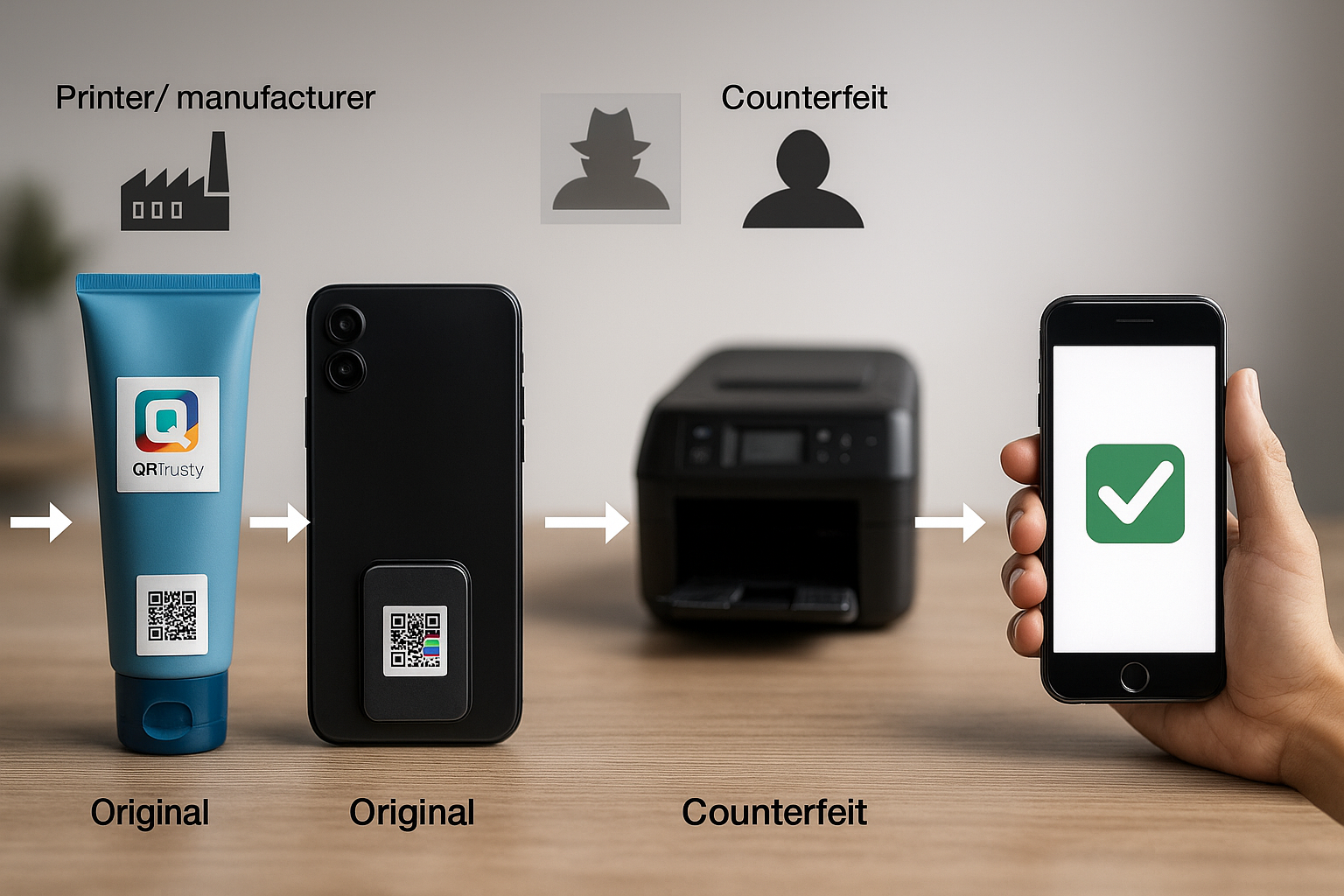
This is the dangerous part: the customer has no way to distinguish between the genuine product and a fake one if both carry the same static QR code. The code scans, the website opens, and the counterfeit product silently passes into the market.
4. Serialized Secure Codes vs. Copied Codes
To build a real anti-counterfeit solution, each product needs its own identity in the form of a unique, non-guessable code. This is called serialization. With serialization:
- Every product unit receives a unique QR code.
- No two genuine items share the same identifier.
- The system can detect when the same code is scanned too often or in impossible patterns.
Counterfeiters, however, usually behave in the opposite way. They make many fake units using the same copied code, because it is cheap and fast.
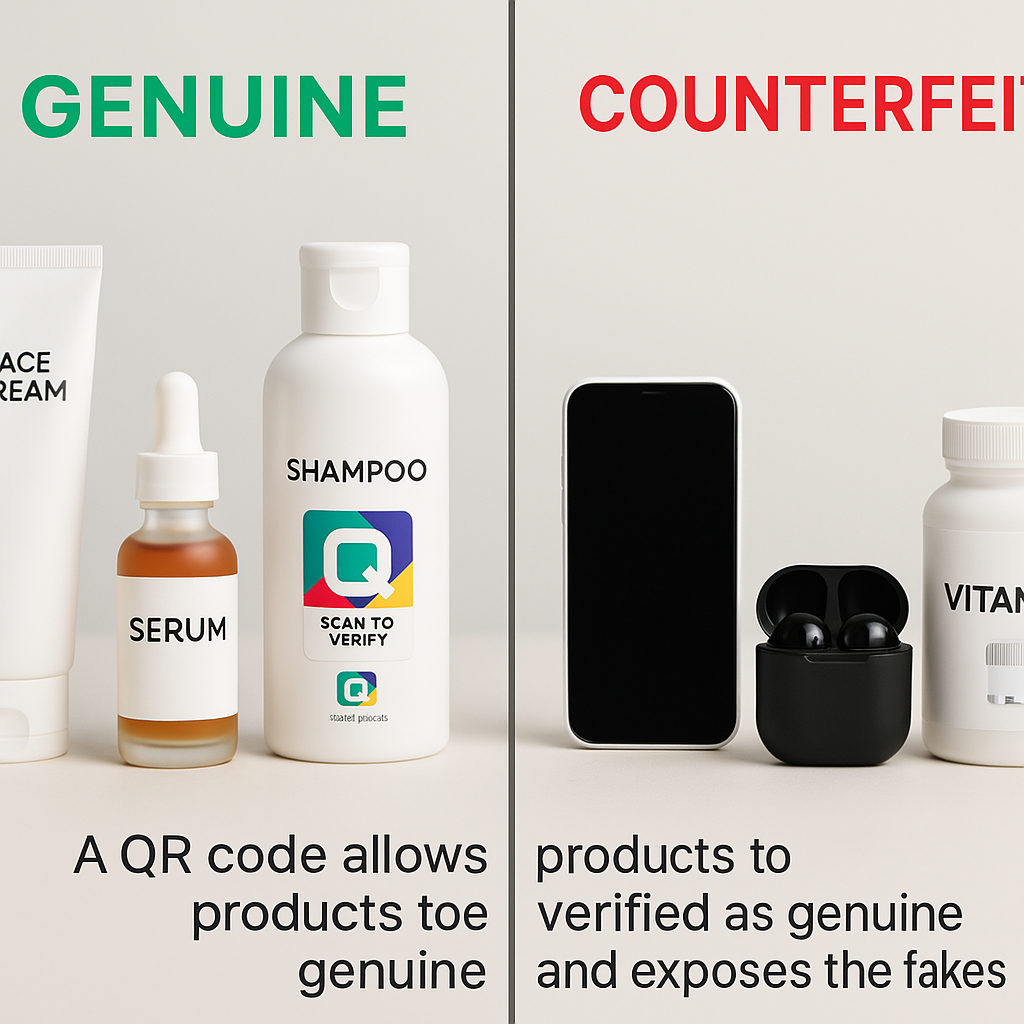
Systems like QRTrusty monitor how these codes behave in the real world. For example:
- If a code assigned to one bottle in Saudi Arabia is suddenly scanned hundreds of times across different countries, that is suspicious.
- If a code is scanned for the first time in a region where you do not officially sell, this may indicate grey-market or counterfeit activity.
- If multiple customers report 'FAKE' for the same code, enforcement actions can be taken quickly.
To see how smart labels extend this concept to logistics, check our article on the benefits of smart labels in supply chains.
5. How QRTrusty Secure QR Codes Block Counterfeits
QRTrusty builds on serialization and adds strong security and brand experience. Instead of simply printing a static URL, QRTrusty generates encrypted identifiers that are validated on the server side. The QR code becomes a secure token, not just a link.
Here is a simplified view of how QRTrusty protects your products from the moment they leave the factory until they are scanned by a consumer:
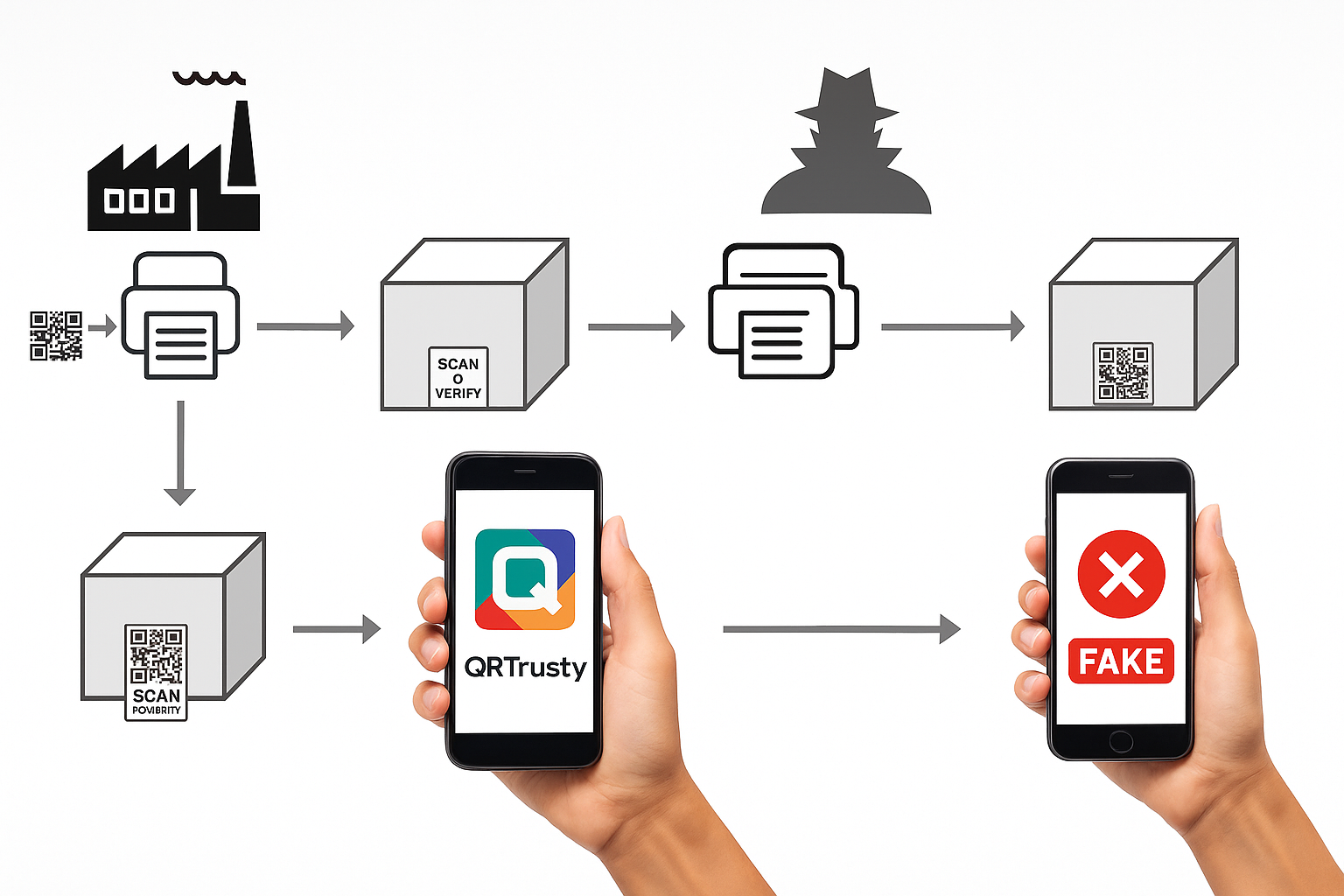
Key elements of the QRTrusty secure flow include:
- Unique encrypted codes: Each unit receives a one-time, non-guessable QR code.
- Backend validation: Authenticity decisions happen on the server, not inside the QR code itself.
- Dynamic business rules: Suspicious patterns (excessive scans, strange locations, impossible timing) trigger alerts.
- Brand-first verification pages: Customers see a clear QRTrusty page with your branding, not a generic technical screen.
6. Customer Journey: Scan, Verify, and Expose Fakes
From the customer’s point of view, the process must be fast and simple: scan, see the result, and feel safe. QRTrusty is designed so that any consumer, inspector, or distributor can verify a product in a few seconds without training.
First, consider what happens when a counterfeit product with a cloned or suspicious code is scanned:
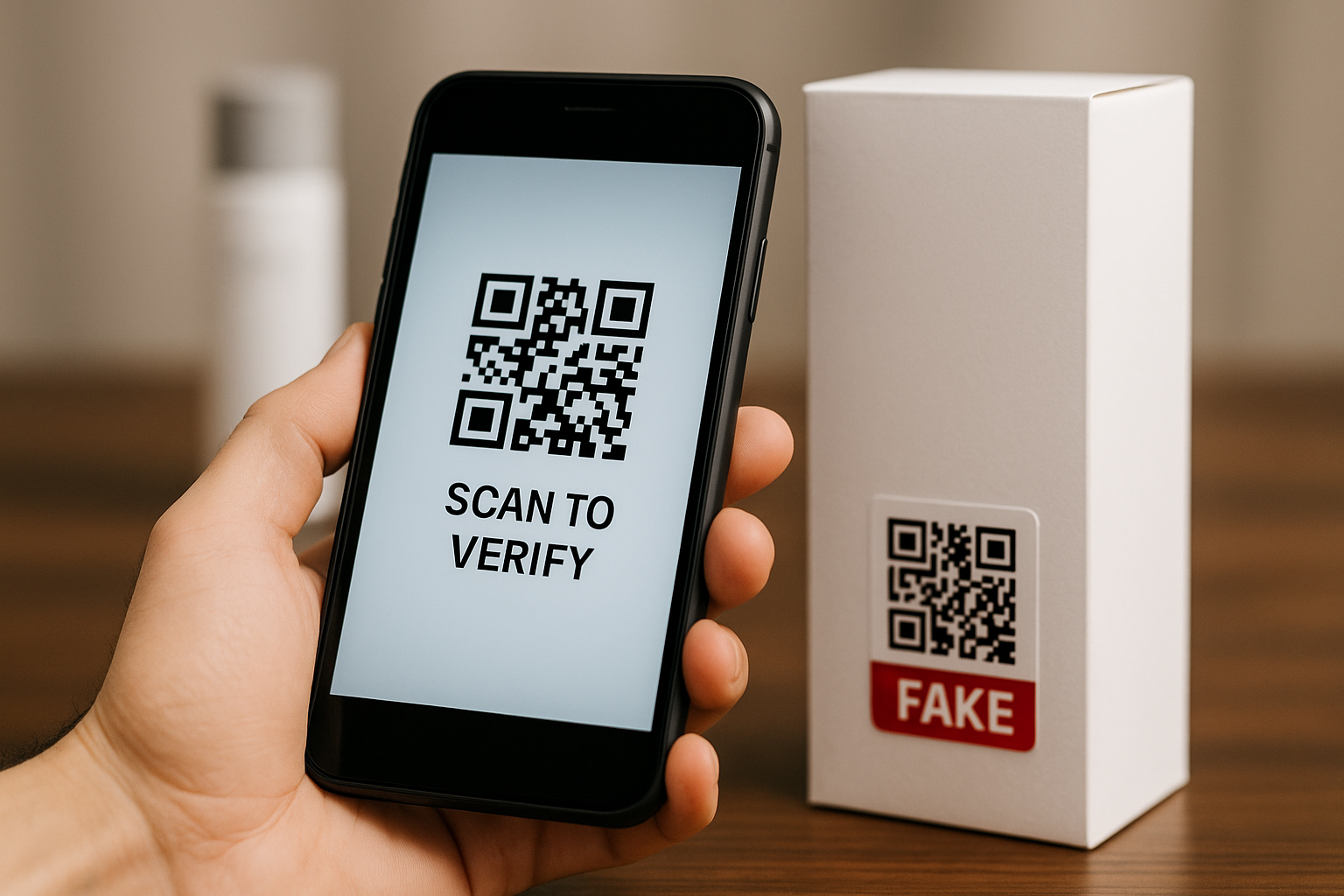
Now, compare it with the experience on a genuine product protected by a secure QRTrusty QR code:
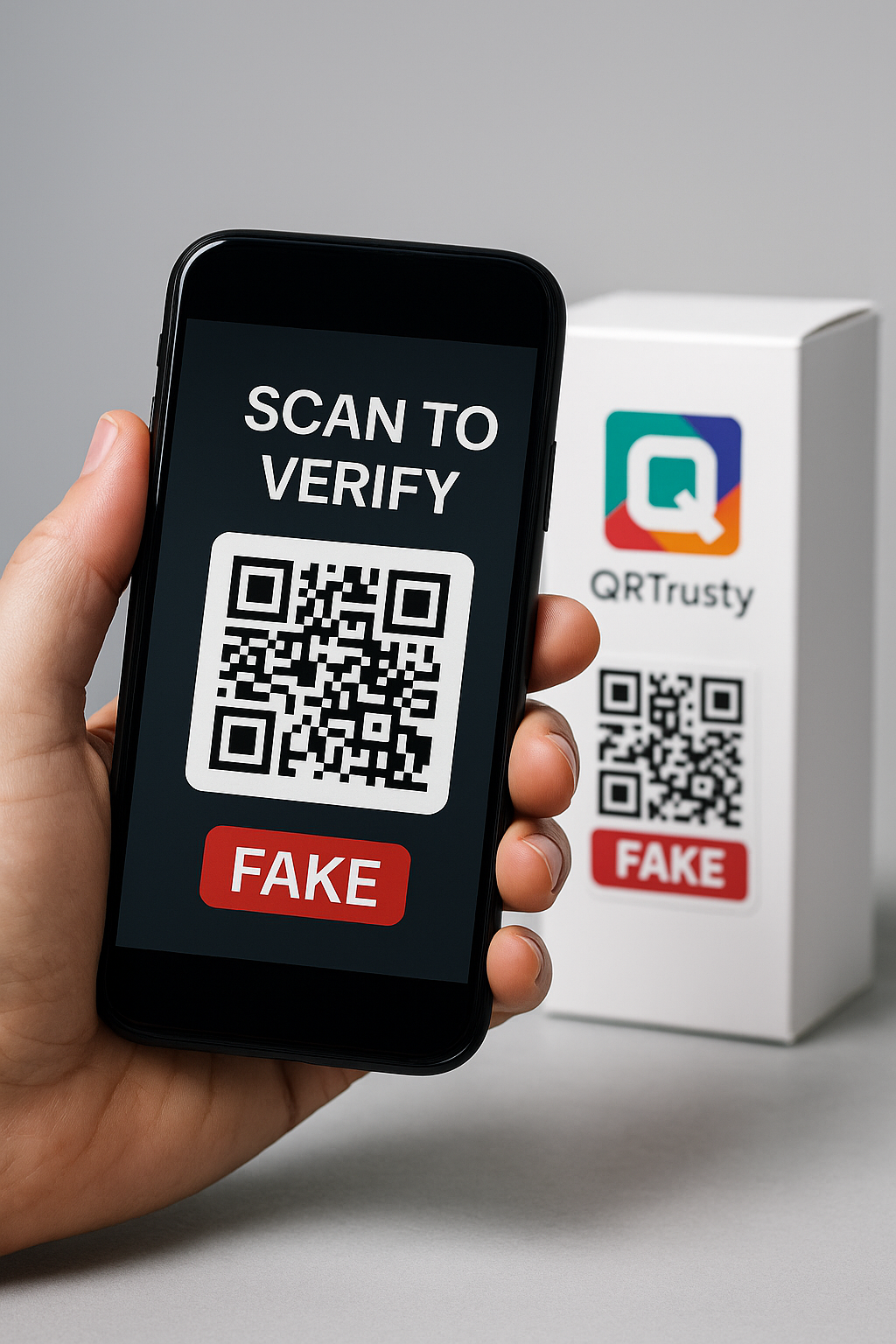
In both cases, the customer simply scans the QR code using their smartphone camera. QRTrusty does the heavy work in the background: validating the code, applying security rules, and presenting a clear REAL or FAKE result.
7. Real-Time Analytics and Brand Intelligence
Every scan is more than just an authenticity check. It is also a valuable data point. With QRTrusty, you can turn these scans into powerful analytics that support both security and business growth.
Examples of insights you can gain from QRTrusty dashboards include:
- Counterfeit hotspots: Cities or regions where FAKE or suspicious scans are concentrated.
- Channel leakage: Distributors or routes that correlate with high levels of suspicious activity.
- Product targeting: Specific SKUs or product families that counterfeiters focus on most.
- Customer engagement: Which countries or segments scan and verify products more actively.
Instead of reacting months later to rumors or complaints, brands using QRTrusty identify threats early. That allows you to intervene, adjust logistics, refine pricing strategies, or even use the data to support legal action against counterfeiters.
8. High-Risk Industry Use Cases
Secure Anti-Counterfeit QR Codes are especially important in industries where fake products can harm customers or damage long-term trust:
- Cosmetics and skincare: Protect premium creams, serums, lotions, and makeup from being copied with unknown or dangerous formulas.
- Food supplements and nutrition: Ensure that pills, powders, and drinks are genuine and produced under proper quality control.
- Consumer electronics: Stop fake chargers, batteries, earphones, and accessories that can damage devices or cause safety incidents.
- Automotive parts: Guarantee authenticity for brake pads, filters, and other components where failure is not an option.
- Medical devices and tools: Support compliance and patient safety for dermarollers, diagnostic kits, and clinic supplies.
If you operate across borders or work with many distribution partners, connecting QRTrusty with your export workflows can make a big difference. You can read more about this in our related article on how exporters use track-and-trace QR codes.
9. Try QRTrusty on Your Products
Counterfeiters are getting stronger, but your brand can be stronger. Normal QR codes can be copied and abused. Secure Anti-Counterfeit QR Codes powered by QRTrusty transform every product into a verification checkpoint and every scan into a piece of intelligence.
If you are serious about protecting your customers, your reputation, and your revenue, the best moment to act is before fake products flood the market, not after.
Recommended next steps:
- Start with a pilot on one or two high-risk product lines.
- Monitor scan behavior through QRTrusty dashboards and refine your security rules.
- Roll out secure QR codes across your entire portfolio once you are confident in the configuration.
Start your free QRTrusty trial and see how secure QR codes work on your own products.
Need help designing the perfect anti-counterfeit program for your brand? Talk to our team and we will help you define a QRTrusty rollout strategy that matches your packaging, markets, and regulatory requirements.