
How QR Codes Help Prevent Counterfeiting: A Comprehensive Guide to Secure Product Authentication
Counterfeiting has become one of the most serious and complex challenges facing modern brands. What was once limited to low-quality replicas sold through informal channels has evolved into a global, industrial-scale operation. Today, counterfeiters use advanced printing, packaging, and logistics systems to produce fake products that are often visually indistinguishable from genuine ones. As a result, brands across cosmetics, pharmaceuticals, electronics, and consumer goods are under constant threat.
The financial impact of counterfeit products is only part of the problem. Fake goods erode consumer trust, damage brand reputation, create regulatory and legal risks, and in many cases pose real safety hazards. Counterfeit cosmetics may contain harmful ingredients, fake pharmaceuticals may be ineffective or dangerous, and counterfeit electronics may overheat, fail, or cause fires. In all cases, the consumer often blames the brand—not the counterfeiter.
To combat this growing threat, brands need more than visual security features. They need a digital, data-driven, and scalable solution that allows anyone—consumers, distributors, inspectors, or regulators—to verify product authenticity instantly. This is where secure QR codes play a critical role in modern anti-counterfeiting strategies.
The Global Counterfeiting Crisis
Counterfeiting is no longer a localized problem. It is a global criminal industry worth hundreds of billions of dollars annually. Fake products move through complex supply chains that often overlap with legitimate distribution networks. Online marketplaces, social commerce platforms, and cross-border shipping have made it easier than ever for counterfeit goods to reach end consumers.
For brands, this creates a dangerous situation. Even companies with strong quality control and authorized distributors can find counterfeit versions of their products circulating in parallel markets. Once a fake product enters the ecosystem, it becomes extremely difficult to trace its origin or stop its spread without a proper verification mechanism.
Traditional anti-counterfeit methods—such as holograms, embossed seals, or printed serial numbers—are increasingly ineffective. Counterfeiters can replicate most visible features with alarming accuracy. What they cannot easily replicate, however, is a dynamic, server-validated authentication system. Secure QR codes shift the battlefield from physical imitation to digital verification, where brands have the advantage.
What Are QR Codes and Why They Matter
QR (Quick Response) codes are two-dimensional barcodes that store information such as URLs, identifiers, or encrypted tokens. They can be scanned using any smartphone camera, making them one of the most accessible technologies in the world. Originally developed for manufacturing and logistics, QR codes are now used in payments, marketing, ticketing, and customer engagement.
In the context of anti-counterfeiting, QR codes serve as a bridge between the physical product and a digital verification system. When implemented correctly, scanning a QR code allows the user to confirm whether a product is genuine, suspicious, or fake—within seconds and without any specialized tools.
However, not all QR codes are created equal. The effectiveness of QR codes in preventing counterfeiting depends entirely on how they are generated, managed, and validated.
The Problem with Normal (Static) QR Codes
One of the most common mistakes brands make is using a static QR code for product verification. A static QR code typically redirects users to a fixed webpage—such as a product page, instruction manual, or marketing landing page. While this may be useful for engagement, it provides no real protection against counterfeiting.
A counterfeiter only needs to scan a single genuine product, copy the QR code, and print it on thousands of fake packages. When consumers scan the copied code, it still leads to a legitimate website, creating a false sense of authenticity. From the consumer’s perspective, the product appears genuine—even though it is not.
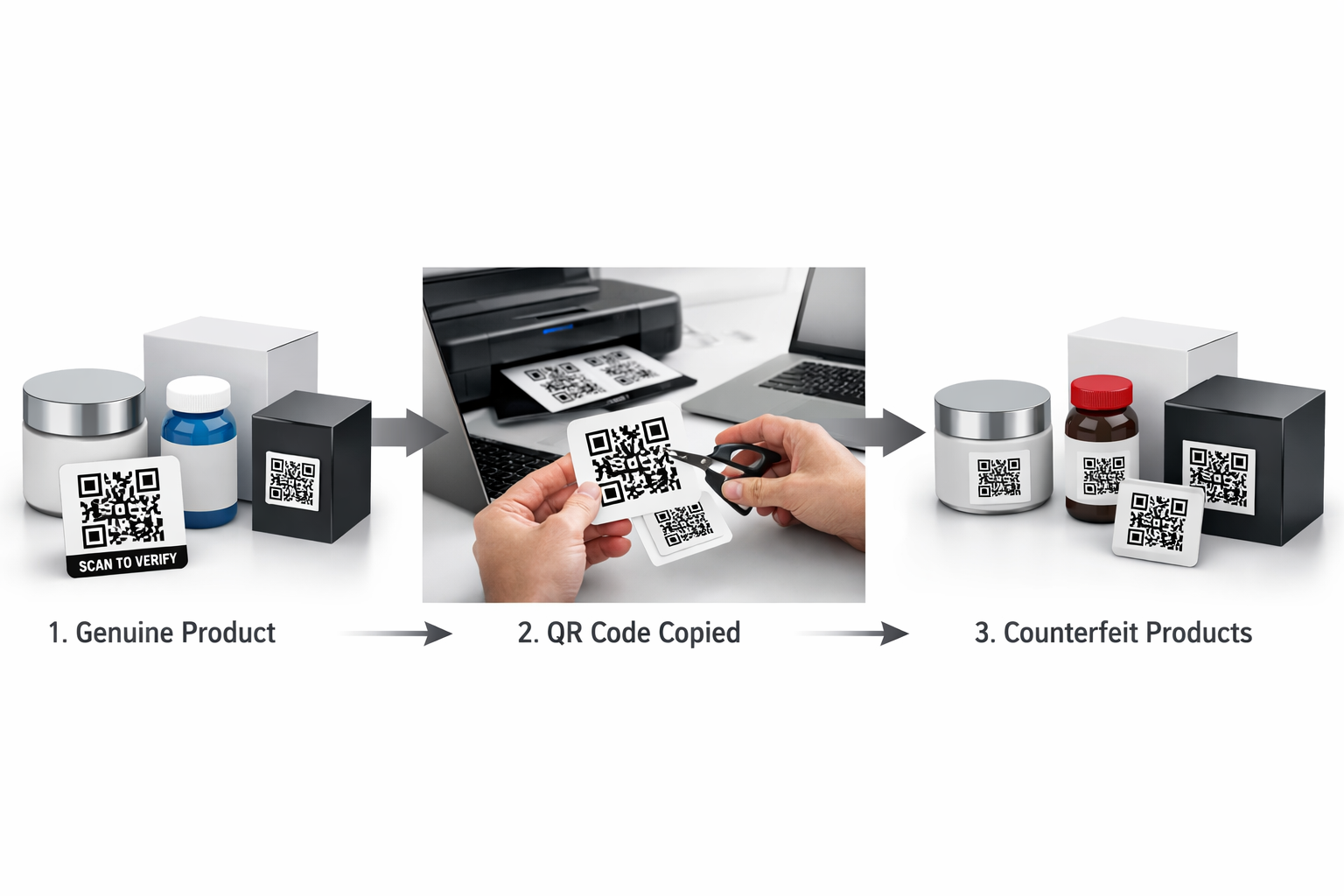
This is why static QR codes are not an anti-counterfeit solution. In fact, when used incorrectly, they can unintentionally help counterfeiters by providing them with a credibility tool that reassures unsuspecting customers.
How QR Codes Help Prevent Counterfeiting: A Comprehensive Guide to Secure Product Authentication
Counterfeiting has become one of the most serious and complex challenges facing modern brands. What was once limited to low-quality replicas sold through informal channels has evolved into a global, industrial-scale operation. Today, counterfeiters use advanced printing, packaging, and logistics systems to produce fake products that are often visually indistinguishable from genuine ones. As a result, brands across cosmetics, pharmaceuticals, electronics, and consumer goods are under constant threat.
The financial impact of counterfeit products is only part of the problem. Fake goods erode consumer trust, damage brand reputation, create regulatory and legal risks, and in many cases pose real safety hazards. Counterfeit cosmetics may contain harmful ingredients, fake pharmaceuticals may be ineffective or dangerous, and counterfeit electronics may overheat, fail, or cause fires. In all cases, the consumer often blames the brand—not the counterfeiter.
To combat this growing threat, brands need more than visual security features. They need a digital, data-driven, and scalable solution that allows anyone—consumers, distributors, inspectors, or regulators—to verify product authenticity instantly. This is where secure QR codes play a critical role in modern anti-counterfeiting strategies.
Secure and Serialized QR Codes Explained
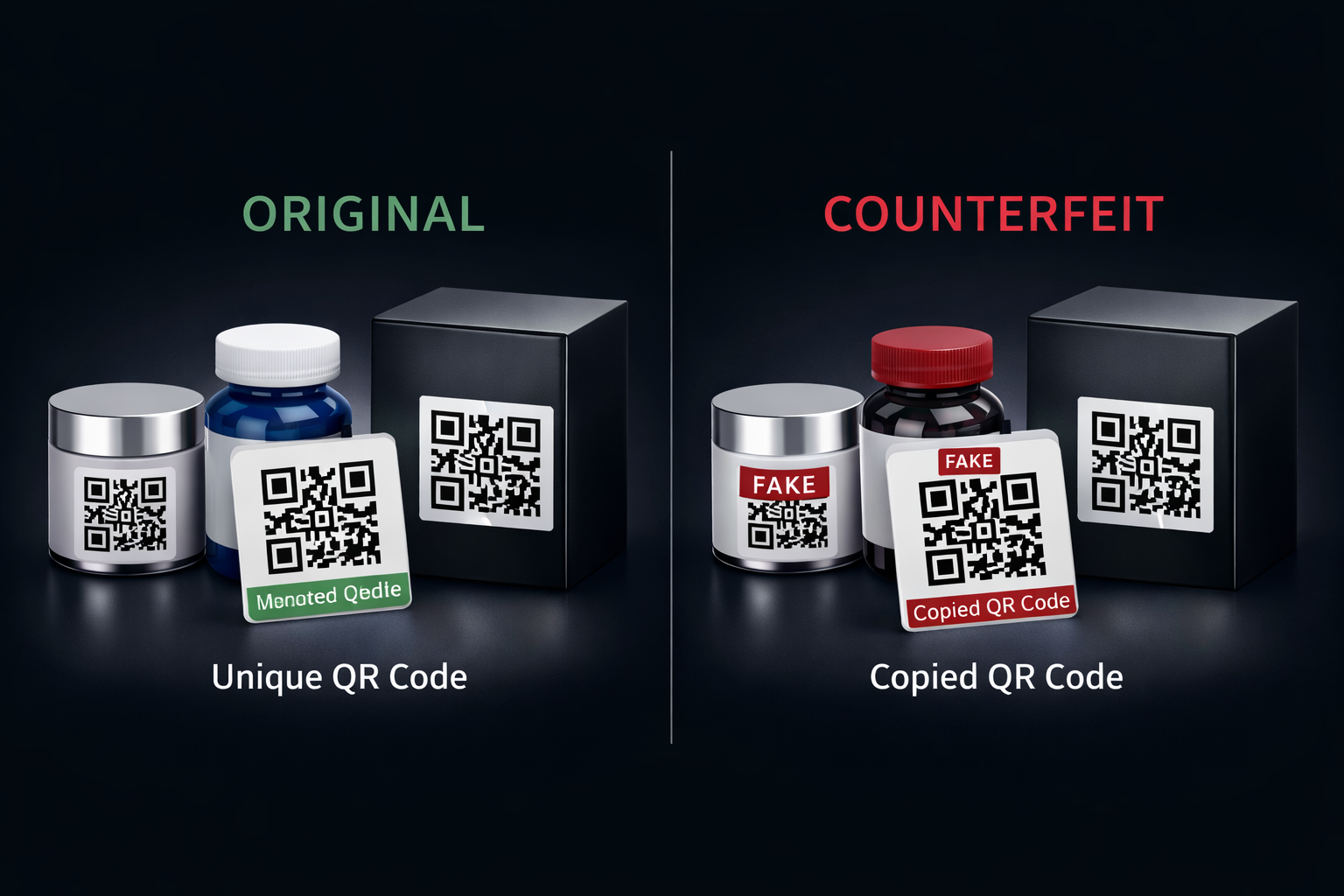
Secure QR codes are fundamentally different from static ones. Instead of using a single reusable code, secure systems generate unique, serialized QR codes for each individual product unit. Every item receives its own digital identity, stored and managed in a secure backend database.
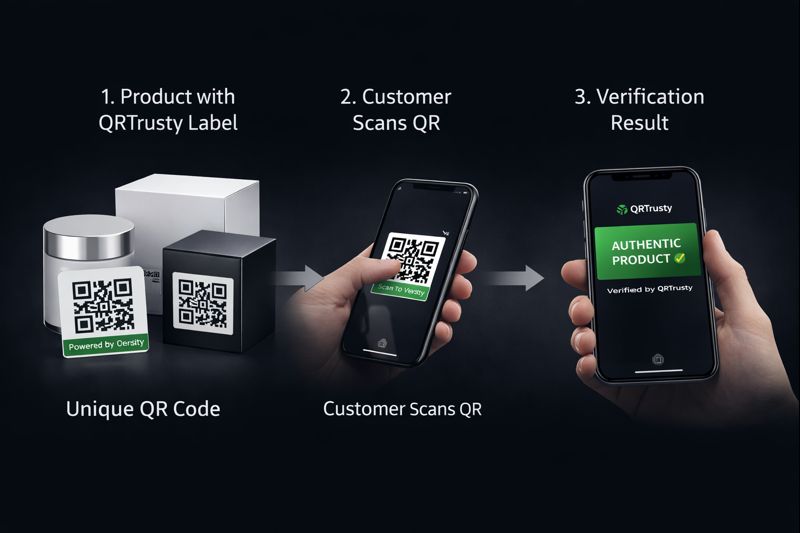
When a user scans a secure QR code, the system does not simply open a webpage. Instead, it performs a real-time verification process that checks multiple factors, including:
- Whether the QR code exists in the database
- Whether the code has been scanned before
- The number of scans and scan frequency
- The geographic location of the scan
- Device and behavioral patterns
This approach makes large-scale counterfeiting extremely difficult. If a counterfeiter copies a serialized QR code and reuses it on multiple fake products, the system will quickly detect abnormal behavior and flag the code as suspicious or fake.
How Secure QR Codes Detect Counterfeit Products
The real power of secure QR codes lies in data intelligence. Every scan generates valuable information that helps the system understand how a product is being used and distributed. Over time, patterns emerge that clearly distinguish genuine usage from counterfeit activity.
Some of the most common indicators of counterfeiting include:
- The same QR code being scanned multiple times in different cities or countries
- High scan volumes within unrealistically short timeframes
- Scans originating from regions outside authorized distribution areas
- Multiple devices scanning the same code almost simultaneously
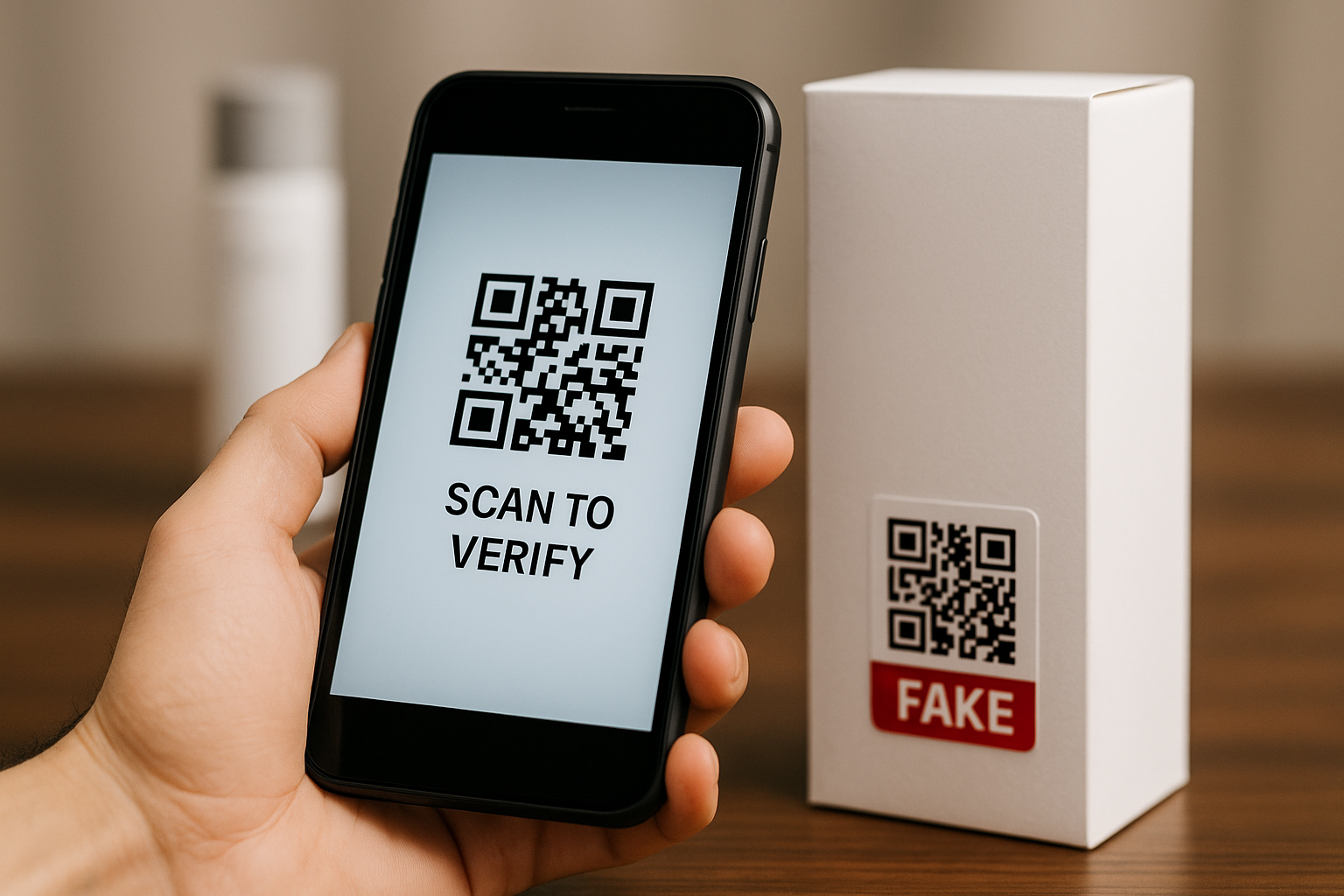
When these patterns are detected, the verification system can automatically respond by showing a warning or “FAKE” message to the user, while simultaneously alerting the brand through analytics dashboards.
How QR Codes Help Prevent Counterfeiting: A Comprehensive Guide to Secure Product Authentication
Consumer Verification: Turning Customers into Defenders
One of the most important advantages of QR-based anti-counterfeit systems is consumer empowerment. Instead of relying solely on enforcement teams or legal action, brands enable customers to verify products themselves at the point of purchase or use.
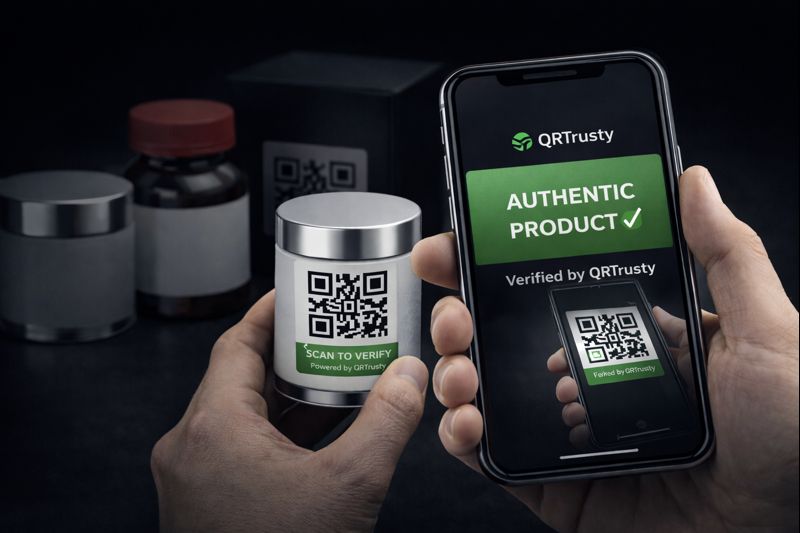
The consumer journey is intentionally simple:
- The customer sees a clear “Scan to Verify” label on the product
- They scan the QR code using their smartphone camera
- A verification page opens instantly
- The system displays a clear result: Authentic, Already Scanned, Suspicious, or Fake
This transparency builds confidence and trust. Customers feel protected, informed, and valued. Over time, this trust translates into stronger brand loyalty and higher repeat purchases.
Industry Use Cases: Where QR Anti-Counterfeit Matters Most
Cosmetics and Personal Care
Cosmetics are among the most counterfeited products worldwide. Fake creams, serums, and makeup items may contain unsafe ingredients that cause skin irritation or long-term harm. Secure QR codes allow consumers to verify authenticity before applying products, reducing risk and increasing confidence.
Pharmaceuticals and Supplements
Counterfeit medicines and supplements pose serious health risks. QR-based authentication enables patients, pharmacists, and regulators to verify products instantly and avoid dangerous fake items.
Electronics and Consumer Devices
Fake chargers, batteries, and electronic accessories can damage devices or cause safety incidents. Secure QR verification ensures customers receive genuine, safe products while helping brands reduce returns and warranty claims.
How to Implement a Secure QR Anti-Counterfeit System
A successful implementation requires more than printing QR codes. Best practices include:
- Generating unique serialized QR codes per unit
- Using tamper-evident or scratch-off labels
- Validating codes on a secure backend
- Defining rules for duplicate detection
- Monitoring analytics and alerts
Common Mistakes Brands Must Avoid
- Using static QR codes for authentication
- Failing to monitor scan analytics
- Not educating consumers about verification
- Ignoring early counterfeit warning signs
The Future of Anti-Counterfeiting with QR Codes
As counterfeiters evolve, anti-counterfeit technology must evolve faster. QR codes will continue to serve as the foundation of product authentication, enhanced by artificial intelligence, advanced analytics, and connected packaging technologies.
Brands that invest early in secure QR authentication gain a decisive advantage: protection, transparency, and trust.
Conclusion: Why Secure QR Codes Are No Longer Optional
QR codes alone do not prevent counterfeiting. Secure, serialized, and verified QR codes do. By implementing a professional QR-based authentication system, brands can expose counterfeit activity, protect consumers, and safeguard their reputation.
In a market where trust is everything, secure QR codes transform every product into a digital guardian. Counterfeiters thrive on weak systems—but against secure QR verification, they fail.